Aurèle Toussaint
Chargé de recherche (CR) / Researcher

📢 Call for postdoctoral applications
MOPGA 2027 — “Make Our Planet Great Again” research stay scholarships
Campus France has opened the MOPGA 2027 call, which funds a 12-month research stay in a French laboratory (€2,500/month + installation allowance and health coverage). If you meet the eligibility criteria and are interested in functional ecology, macroecology or the consequences of biodiversity loss, please contact me so that we can build a project together and apply with CRBE (Toulouse) as host laboratory.
- Foreign nationality only (non-French), not residing or working in France at the time of application
- PhD obtained between December 2021 and December 2026 (extensions possible for maternity leave); no previous MOPGA funding
- Project within one of the call's themes, e.g. climate change and sustainability science
- Deadline: 15 December 2026 — a support letter from the host laboratory is required, so please get in touch well in advance
 New paper
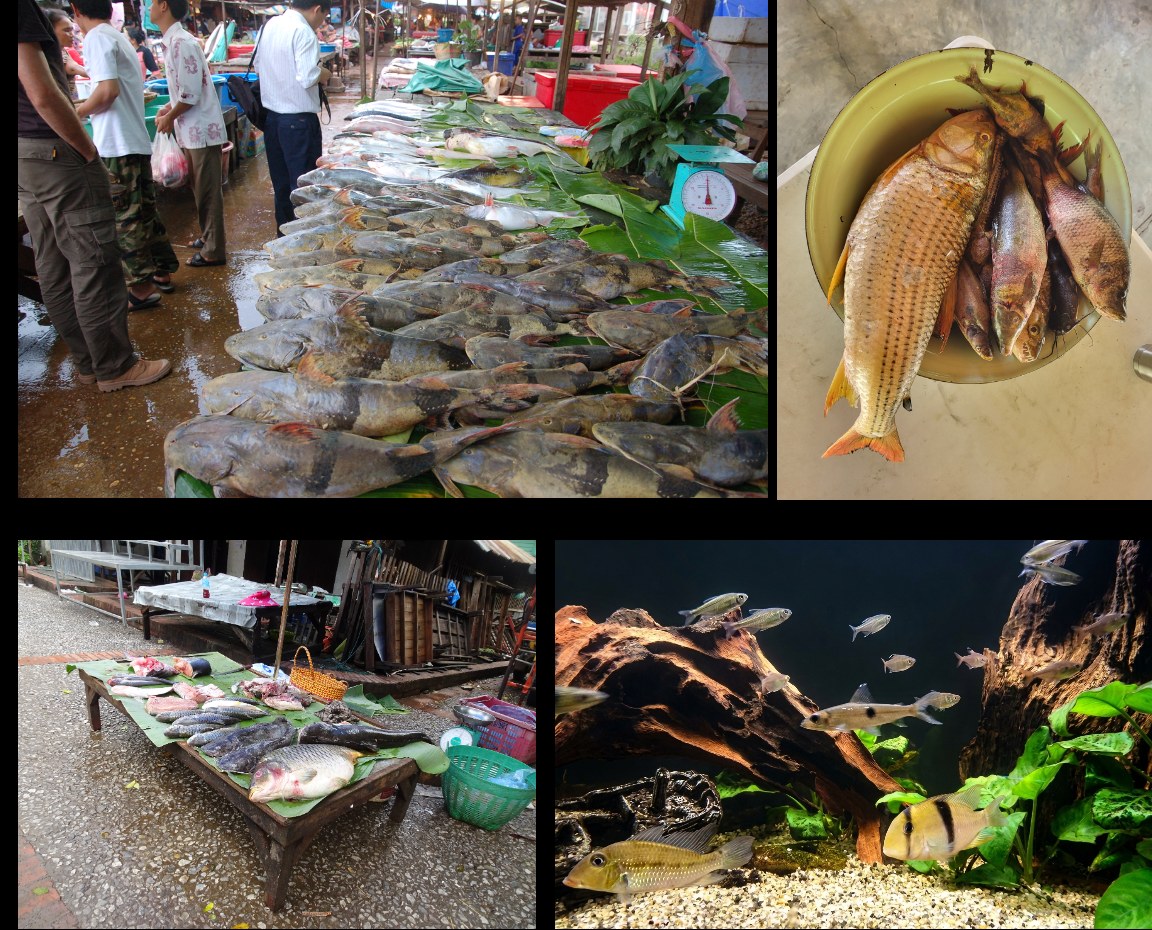
Human targeting of morphologically unique fishes amplifies the risk of functional erosion
Fisheries, aquaculture, game fishing and the aquarium trade each target distinct fish body plans, and aquaculture and angling favour morphologically original species. Losing the threatened species we use would erode the global diversity of freshwater fish forms four times more than expected by chance.
UMR5300 — UPS · CNRS · IRD · INP
Université de Toulouse
Bât. 4R1, bureau 29 · 118 Route de Narbonne
31062 Toulouse, France
🌐 CRBE website
Profiles & CV
Citation metrics
Explore
Research
My research sits at the interface of macroecology, functional ecology, and conservation biology, with a focus on understanding how the functional diversity of vertebrates and plants is distributed across the globe, what processes generate and maintain these patterns, and how anthropogenic pressures are reshaping them.
A central theme of my work is the functional diversity of freshwater fishes. During my PhD and subsequent projects, I built one of the largest morphological trait databases for freshwater fishes, covering more than 9,000 species across more than 1,000 river basins worldwide. This work revealed that functional diversity is highly concentrated in the Neotropics — which host more than 75% of global functional diversity — and is only weakly correlated with species richness at macroecological scales. I showed that the introduction of non-native species has fundamentally restructured the functional composition of fish assemblages worldwide, increasing functional diversity by up to 150% on average while simultaneously driving taxonomic homogenization through the dominance of a few widespread invasive species.
A second major axis of my research concerns the consequences of biodiversity loss for functional diversity. I have demonstrated that the extinction of threatened vertebrates will not lead to uniform losses of functional diversity, but rather to idiosyncratic changes that vary substantially across biogeographic realms and taxonomic groups. In birds, I showed that non-native species will not compensate for the functional and phylogenetic diversity lost following the extinction of threatened species, highlighting the irreplaceable role of native biodiversity in sustaining ecosystem functioning.
More recently, I have been investigating intraspecific trait variability as a neglected but critical component of functional diversity. The INTRAIT project aims to quantify morphological variation within freshwater fish species in French Guiana and to assess how ignoring this variability biases community-level estimates of functional diversity.
Across all these research axes, I employ a combination of large-scale trait databases, multivariate statistics, and simulation approaches implemented in R. My work has been published in leading international journals: